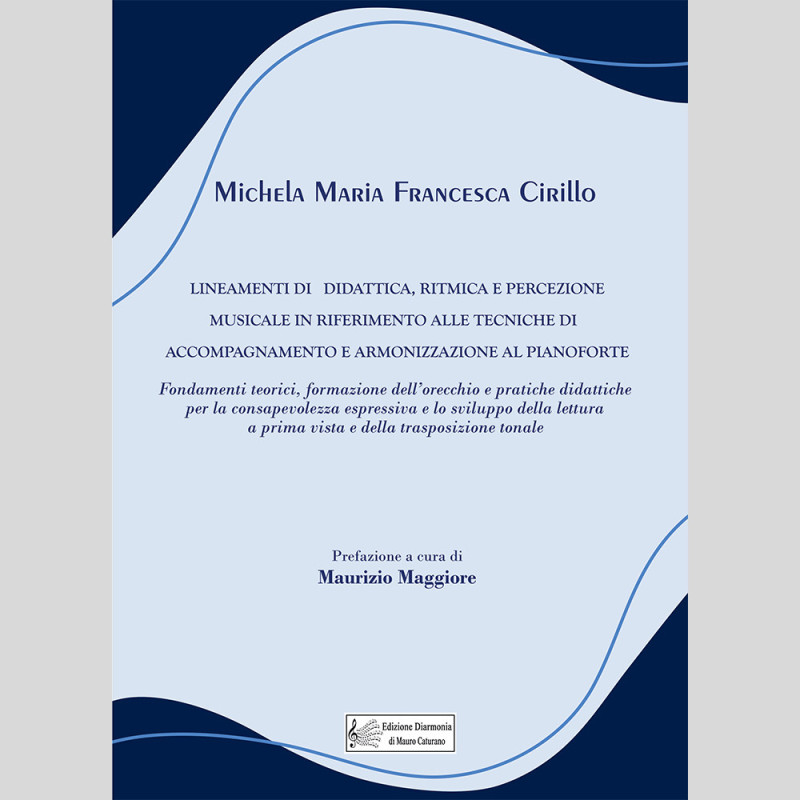


Music represents one of the highest forms of expression of human intelligence and sensitivity: it is capable of communicating emotions, ideas, and cultural values that span different eras, peoples, and traditions. However, for musical language to be fully understood and used, it is necessary to develop a comprehensive set of theoretical knowledge, perceptual skills, and practical abilities that form the foundation of musical education. The study of musical theory, rhythm, and perception therefore occupies a central position in the educational and professional paths of musicians. These disciplines should not be considered simply as preparatory tools for instrumental or vocal performance, but as essential components of a broader educational process, aimed at a profound understanding of the sonic phenomena and structures that govern musical language.
Data sheet
Specific References